
The helper quit without notice. You're RM4,000 lighter, your mother's routine is disrupted again, and you're running the same exhausting mental arithmetic: cancel the morning, drive to her place, reschedule everything else. You're not failing your parents — you're using a process that wasn't designed for a situation like yours.
Most agencies match eldercare helpers the same way they match housekeepers: biodata, selection, done. For a vulnerable elderly parent, that's the wrong tool entirely. This article explains why most placements fail, what your parent actually needs from a helper, and how to get the match right the first time. If you're researching costs, that's covered here; for Indonesian vs Filipino comparisons, see this guide.
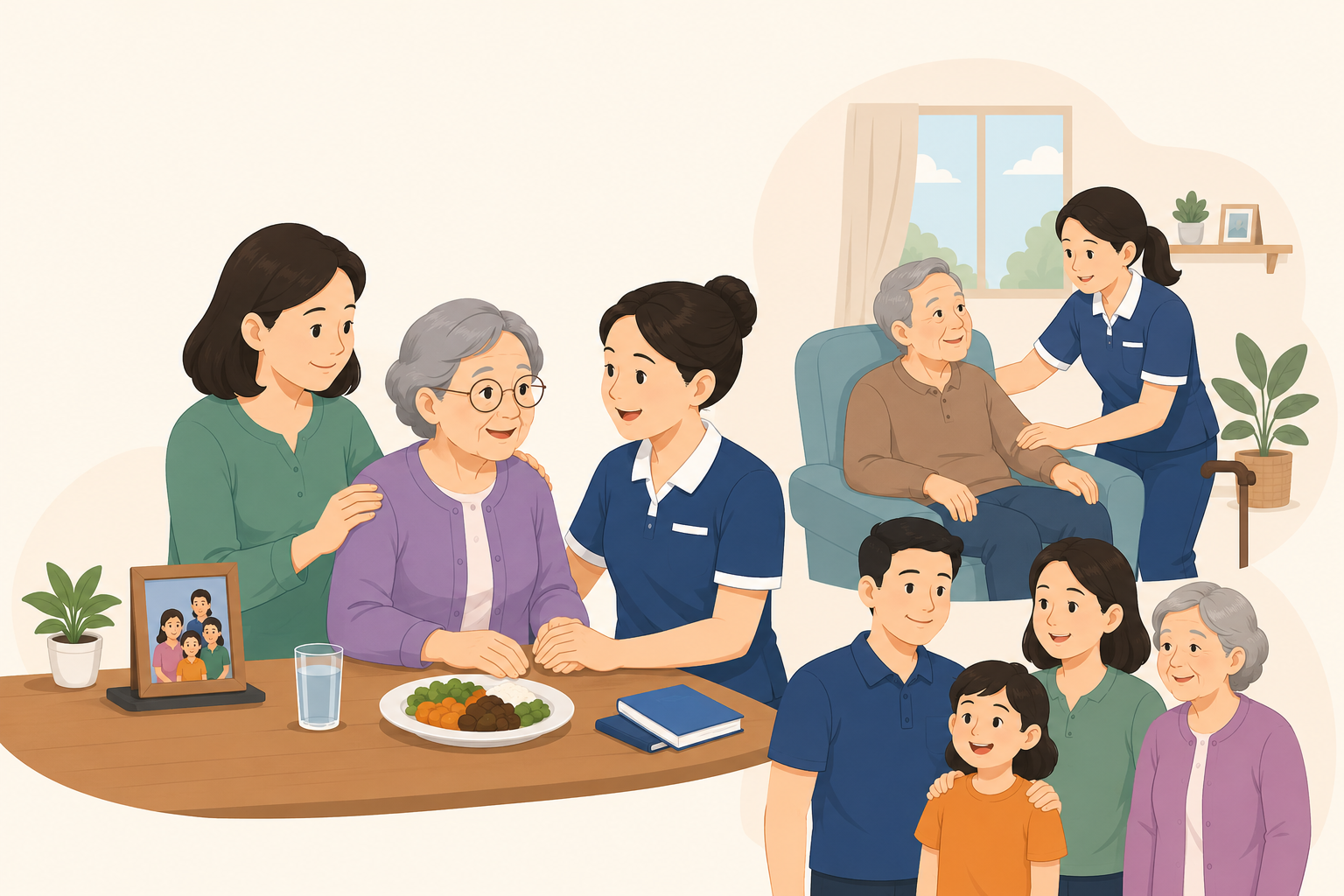
Malaysia's Quiet Caregiver Crisis
Many Malaysian families are caught in what's known as the sandwiched generation — adults in their 30s to 50s raising children while caring for aging parents, in a city where a daily commute can consume 2 to 5 hours. That's how long a parent with mobility issues, diabetes, or early dementia is at home without you. Every one of those hours carries real risk.
In Malaysian Chinese, Malay, and Indian communities, berbakti kepada ibu bapa runs deep. Asking for help can feel like falling short — but the harder truth is that a significant number of placements fail within the first year. Each one restarts everything: new fees, a new adjustment period, and a vulnerable person who has to trust a stranger all over again. For eldercare, getting the match wrong costs far more than for general housekeeping.
Why Most Eldercare Placements Go Wrong
The Biodata Problem
Most agencies send biodata sheets — a photo, basic details, a skills list — and you pick one. For eldercare, this isn't enough. Everything that actually matters — how she handles confusion, whether she's patient under stress, how she communicates with someone who can't express pain clearly — none of that appears on a biodata sheet. At the volume high-volume agencies operate, deep family assessment simply isn't possible.
What a Real Mismatch Looks Like
- A helper who has never cared for a dementia patient. Your father's repetition frustrates her. Her care turns cold; he starts refusing meals.
- A helper with no experience recognising post-stroke warning signs. Your mother has a TIA while you're at work, and the helper doesn't know what she's seeing.
- A Cantonese-speaking grandmother paired with a helper whose only shared language is basic Bahasa Malaysia. Your grandmother stops trying to communicate.
Each ends in another failed placement, more fees, and a vulnerable person who has to adjust to a stranger all over again. For a dementia patient especially, routine is clinical — a new helper means new disruptions that don't simply reset.
What Your Elderly Parent Actually Needs
Malaysia has some of Asia's highest rates of diabetes and stroke, and post-stroke recovery at home is increasingly common. Each condition requires specific, verifiable capability — not a willingness to figure it out as she goes.
Language is one of the most overlooked factors. A helper who can't communicate meaningfully with your parent isn't just inconvenient — she's creating daily isolation for someone already losing things. Cultural alignment matters too, from halal food preparation to how illness is treated in the home.
Household fit matters just as much. Whether your family needs someone proactive or someone who follows a structured care plan, getting that wrong creates friction that usually ends in the helper leaving. Understanding which background and nationality suits your household is part of what we assess before any introduction is made.
How Jaya Persona Approaches Matching Differently
We don't show candidates until we understand the family. Every placement starts with a 20 to 30-minute consultation — not a form, not a 5-minute call — covering:
- Your parent's medical conditions, daily routine, and care requirements
- Language preferences and communication needs
- What happened in previous placements and why they didn't work
- Your household's communication style and expectations
- Cultural, religious, and dietary requirements
Only then do we match. You get a specific recommendation with a clear explanation of why that person suits your family — not a shortlist to browse through.
We verify eldercare experience through reference checks, not self-reporting, and assess temperament and language compatibility specific to your household. Our candidates are sourced through Embassy of the Philippines and Embassy of Indonesia accredited channels. We're JTKSM-licensed and handle the full legal process: the PLKS work permit, FOMEMA clearance, and SOCSO registration. We keep our caseload deliberately low so that when something comes up in the first few weeks, you're calling someone who already knows your situation.
Quick Reference Guide
How to Find a Reliable Eldercare Maid in Malaysia
- Assess your parent's specific needs first. Document their medical conditions, daily routine, language preferences, and care requirements before contacting any agency.
- Verify JTKSM licensing and embassy accreditation. Only a JTKSM-licensed agency can legally place foreign helpers in Malaysia.
- Demand a family consultation before any biodata is shown. If candidates come before the consultation, the assessment never happened.
- Ask specifically about eldercare experience. What conditions has she managed, for how long, and can the agency provide references?
- Confirm language and temperament compatibility. Ask how the agency verified the candidate suits your specific household.
- Ensure all legal documentation is handled. PLKS work permit, FOMEMA clearance, and SOCSO registration - a good agency manages all of this.
- Establish post-placement support from day one. The first 90 days carry the highest risk. Confirm the agency stays in contact.
Red Flags to Watch For
Use these to evaluate any agency you speak with. For a fuller checklist, see our guide on 10 questions to ask before signing any contract.
- They send biodata before asking about your family. If candidates come before the consultation, the assessment didn't happen.
- Their main selling point is a warranty. That's confidence in replacing failures, not preventing them.
- They can't explain why a candidate suits your household. Ask: "Why is this person right for my family?" Vague answers mean superficial matching.
- They disappear after the helper arrives. The first 90 days carry the highest risk. A good agency stays in contact. See our 2026 cost guide to understand what post-placement support should include.
Frequently Asked Questions
-
Look beyond the biodata. Verify experience with your parent's specific conditions - diabetes, post-stroke care, dementia. Confirm language compatibility and check temperament through reference calls, not just the agency's word.
-
An agency that asks about your family before showing candidates. JTKSM licensing and embassy accreditation confirm legal compliance. Post-placement support in the first 90 days is non-negotiable for eldercare.
-
Typically 4 to 8 weeks from consultation to arrival, depending on permit processing and medical clearance.
-
Not for eldercare. A warranty fixes failures after they happen. For a dementia patient, every new helper disrupts the routine their stability depends on. Getting the match right the first time matters far more.
-
Yes, with the right person. She needs structured routine management, gentle redirection skills, and patience with repetition. These must be specifically verified before placement.
You Don't Have to Figure This Out Alone
The first conversation with Jaya Persona is 20 to 30 minutes, no commitment needed. You speak with one consultant who knows your case. When you find the right helper — someone your parent trusts, who knows their routine, who fits your household — you'll know the difference straight away. That's what we're here to help you find.